
At first glance, ODD TAXI looks deceptively simple. An unassuming taxi driver, a quiet city, and a cast of animal-like characters going about their everyday lives—it hardly seems like the foundation for one of the most intricately written anime of recent years. Yet as the story unfolds, ODD TAXI reveals itself as a masterclass in layered storytelling, where small conversations and mundane events slowly weave into a deeply complex and interconnected narrative.
So how does ODD TAXI transform a seemingly ordinary premise into something so compelling?
A Minimal Setup That Hides a Larger Design
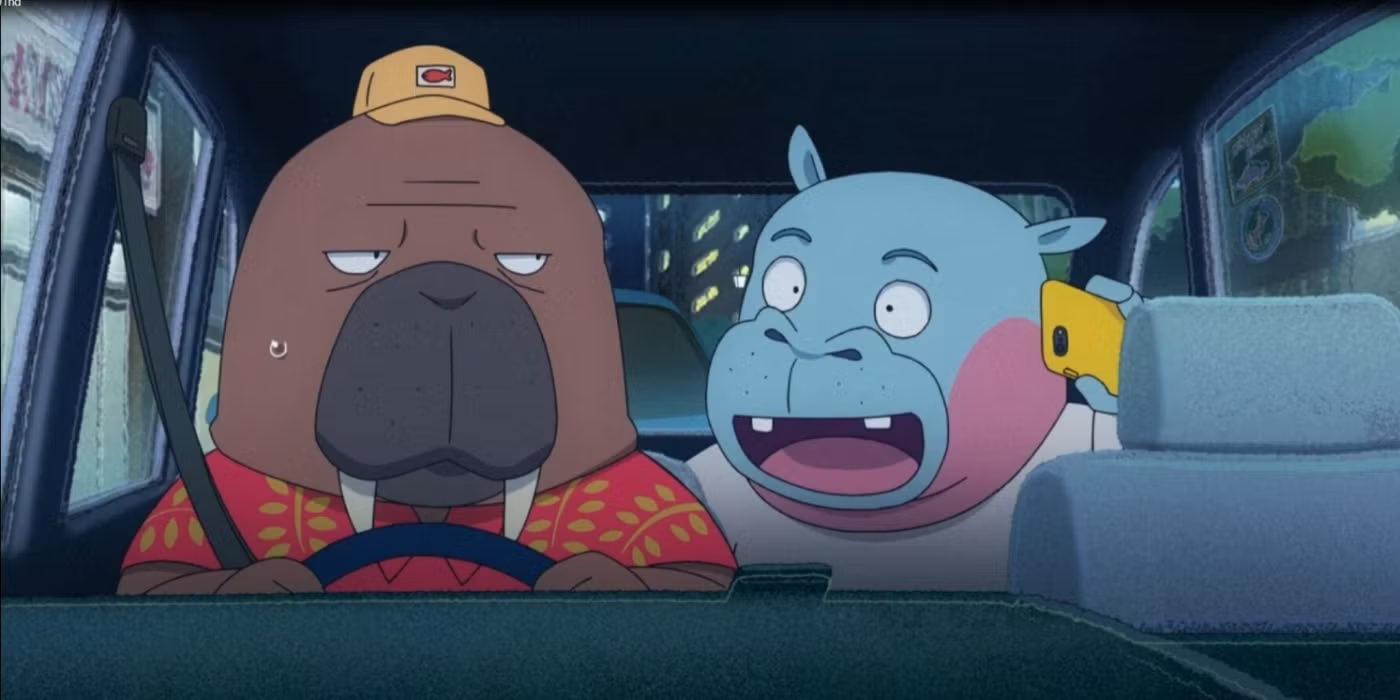
The core of ODD TAXI revolves around Hiroshi Odokawa, a middle-aged taxi driver living a lonely, routine-driven life. He picks up passengers, listens to their conversations, and offers blunt, often awkward commentary. On the surface, nothing about his life appears extraordinary.
This minimal setup is intentional. By presenting the story as calm and understated, the series encourages viewers to lower their guard. There are no dramatic exposition dumps or obvious villains early on. Instead, ODD TAXI relies on subtle clues, casual dialogue, and background details—laying the groundwork for a narrative that gradually expands in scope and tension.
Conversations as Narrative Building Blocks
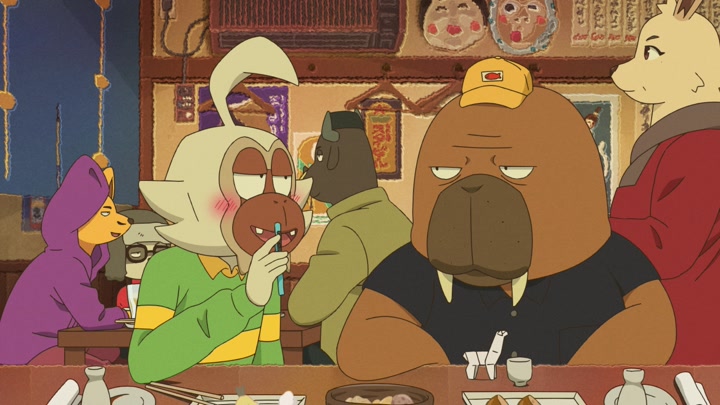
One of ODD TAXI’s most distinctive storytelling techniques is its use of dialogue. Nearly every conversation Odokawa has with his passengers feels natural, even mundane. Characters talk about social media, failed careers, jealousy, loneliness, and small frustrations.
However, these conversations are never meaningless. Each interaction plants seeds that later grow into major plot points. What initially seems like idle chatter slowly reveals connections between characters, hidden motivations, and unresolved conflicts. The brilliance of ODD TAXI lies in how it rewards attentive viewers, turning simple exchanges into critical narrative threads.
Interconnected Characters, Intertwined Lives
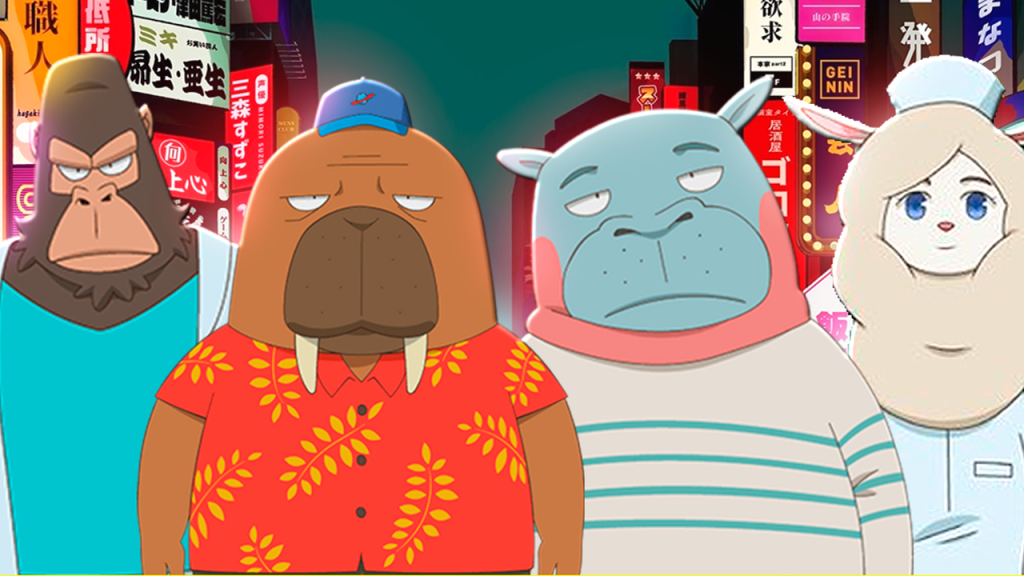
As the series progresses, it becomes clear that no character exists in isolation. A struggling comedian, an idol group member, a corrupt police officer, internet influencers, and criminal figures all occupy the same city—and their lives quietly intersect through Odokawa’s taxi.
Rather than following a single protagonist’s journey, ODD TAXI builds its complexity through interconnection. Each character’s personal problem is linked to another’s, forming a web of cause and effect. The missing girl at the center of the mystery is not just a plot device—it’s the point where many personal stories collide.
This structure reflects real life, where individual choices ripple outward in unexpected ways.
Trusting the Audience’s Intelligence
ODD TAXI stands out because it refuses to explain everything immediately. The series trusts viewers to remember details, recognize patterns, and draw conclusions on their own. Clues are often hidden in background visuals, throwaway lines, or character reactions.
This approach transforms watching ODD TAXI into an active experience. Viewers are not passive consumers of information—they become participants in uncovering the truth. As the story grows more complex, earlier episodes gain new meaning, making rewatching especially rewarding.
The Power of Perspective
One of the most striking elements of ODD TAXI is how perspective shapes understanding. Odokawa is an unreliable narrator in subtle ways, and the world is filtered through his perception. What viewers initially accept as normal gradually comes into question.
Without spoiling the story, ODD TAXI uses perspective to challenge assumptions about reality, memory, and trauma. This narrative choice adds emotional depth and recontextualizes the entire series, proving that complexity doesn’t require flashy twists—it requires thoughtful execution.
Realistic Themes Beneath the Surface
Despite its animal character designs, ODD TAXI tackles very real, modern issues: loneliness in urban life, the pressure of online validation, exploitation in the entertainment industry, and the quiet desperation of people chasing success.
These themes are woven naturally into the story, never feeling forced or preachy. The complexity of ODD TAXI doesn’t come from its plot alone, but from how realistically it portrays human behavior. Characters make poor decisions, misunderstand each other, and act out of fear or insecurity—just like real people.
Why the Story Feels So Satisfying
What makes ODD TAXI exceptional is how everything eventually connects. Loose threads are tied together not through coincidence, but through carefully established cause and effect. When revelations occur, they feel earned.
The story’s complexity grows organically from its simplicity. Rather than overwhelming the audience, ODD TAXI builds trust, layer by layer, until the full picture becomes clear. It proves that a quiet story can be just as powerful—if not more so—than one filled with spectacle.
Why ODD TAXI Stands Out
In a medium often driven by action or fantasy escalation, ODD TAXI shows that writing and structure alone can create tension and depth. It demonstrates that a story doesn’t need to be loud to be complex, nor flashy to be memorable.
By transforming ordinary moments into essential pieces of a larger puzzle, ODD TAXI leaves a lasting impression on viewers who appreciate thoughtful, intelligent storytelling.
Final Thoughts & Call to Action
If ODD TAXI captivated you with its subtle clues, interconnected characters, and brilliantly layered narrative, celebrating that experience goes beyond simply watching the series once.
👉 If you are a fan of ODD TAXI, you can explore and purchase merchandise inspired by the series at Official ODD TAXI Merchandise: oddtaxi.store — a great way to honor one of anime’s most cleverly constructed stories.
